
What Do You Think?
The 4 Most Underrated Words in Leadership

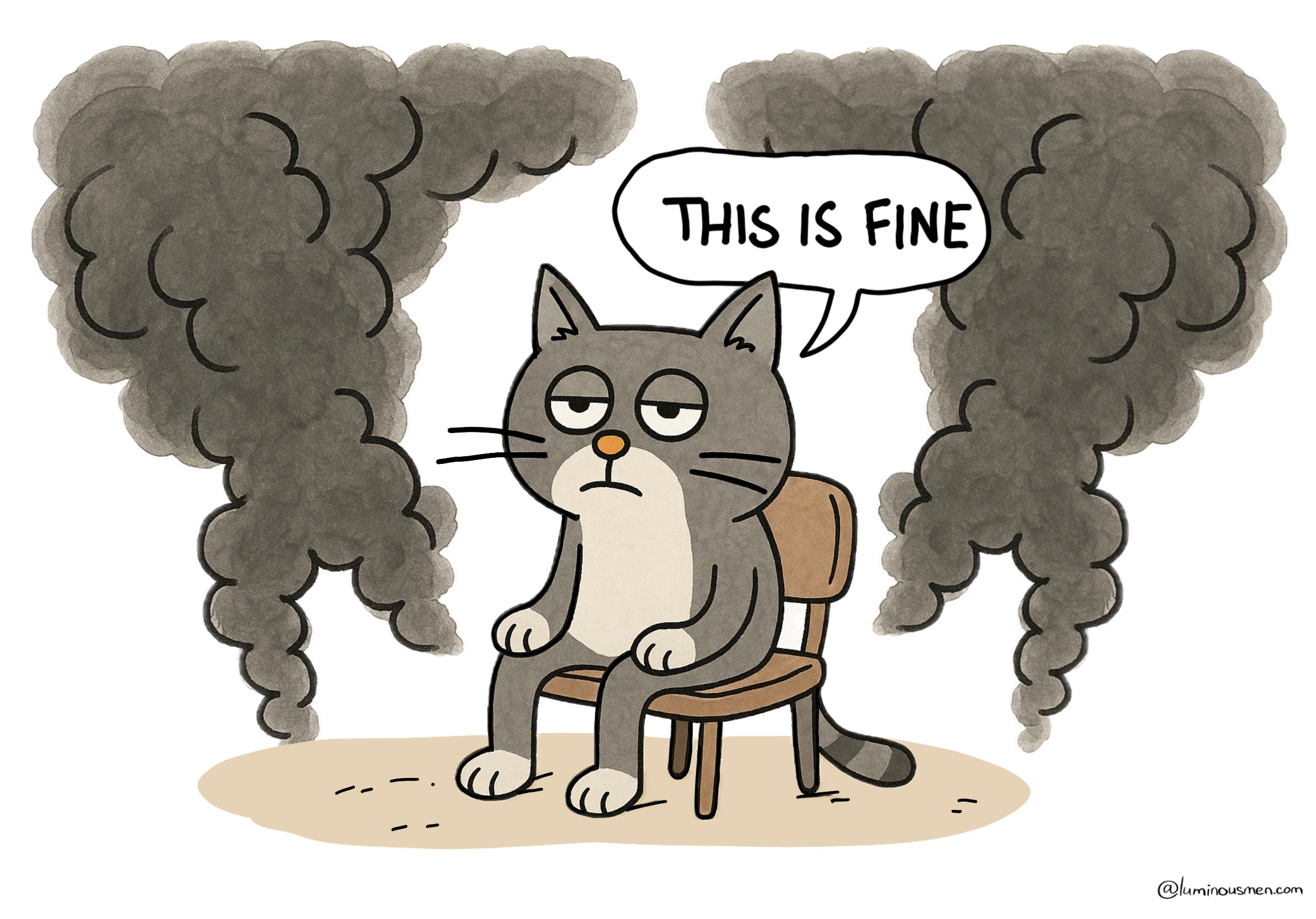
There’s an old psychology experiment that still messes with my head when I think about it.
Researchers brought a group of people into a room and told them they were participating in a “reaction time study”. This was a red herring — the real test began when smoke started literally pouring out of the ventilation shaft. One by one, participants noticed it... and did absolutely nothing.
They looked at the smoke, looked around, and saw no one else reacting. So they shrugged and stayed silent.
If a person were alone in that room, they’d almost certainly report the smoke right away. But when others are around they wait, they hesitate. They defer the responsibility of action to someone else.
This is called pluralistic ignorance — and it’s pretty terrifying. Even scarier is how often it happens, even outside of extreme situations like this.
Human Stack Overflow
We all have that one coworker — the one who runs to you with every new question without even trying to figure it out first. Eventually, you realize the problem isn’t that they’re dumb — it’s that they’ve gotten used to not thinking. They’ve outsourced their brain. Just like many of us now write questions straight into a prompt instead of sitting with them for a minute.
Thinking is expensive — it takes time, energy, and worst of all, there’s a chance you’ll end up wrong anyways. So when there’s an easier path, like making someone else do the cognitive heavy lifting, guess what most people default to?
Yep — not thinking.
When someone asks you a question, what they usually want is a quick, ready-to-use answer so they can move on. Fair enough — we’re all sprinting through endless task lists. But if you keep giving in to that impulse, you slowly become your team’s personal Google search or Stack Overflow — and that’s very ineffective for you and for your team.
This dynamic isn’t just annoying — it kills team growth. Every time you answer a question that wasn’t well thought through, you’re reinforcing that, “Thinking is optional. Someone else will do it for me” shortcut.
People gravitate toward patterns that give them results with minimal effort. It’s just simple efficiency… misapplied. You’re turning your team into button-pressing monkeys. Push for an answer. Receive banana. Repeat.
So… what do you think?
Now imagine a situation.
A junior dev walks up to you and goes, “Hey, I’m not sure what sharding strategy we should use here”.
And you respond with a calm, steady, “Interesting. What do you think?”
Pause, their brain is working.
“Well... I was thinking about sharding by user_id, since most of our access patterns are user-focused. But I’m worried it might cause data skew.”
Nice! That’s a good start to an actual conversation.
That one simple line — “What do you think?” — changes the entire dynamic. It forces the person asking to stop, think, and engage their brain before handing the problem off to someone else.
It’s not rude. It’s a challenge. A nudge to a conversation rather than prompting. An invitation to participate instead of just receiving.
Here’s what you do next time someone comes to you with a question: Don’t answer it. Look them in the eye, channel your inner Socrates, and ask:
“What do you think?”
Most people freeze the first time. They’ll stall, mumble, maybe panic a bit inside. There is a moment to resist the urge to jump in — hold the silence. Let it do the work.
This isn’t about being lazy or dodging help. It’s about transferring ownership. You’re not a Google/StackOverflow anymore — you’re a mentor.
💡And yes, there’s a fine line between mentoring and being a passive-aggressive “figure it out yourself” guy. Don’t cross it. Nobody likes that guy. Be curious, not condescending.
The cool part is — the more you do this, the better it works. You’ll start noticing fewer questions, and the ones you do get will be better. People will stop coming to you empty-handed. They’ll start bringing trade-offs, hypotheses, and even possible solutions. It’s amazing.
One small phrase, and suddenly you’re not the bottleneck anymore — you’re the team multiplier.
Because when people start thinking for themselves, they stop fearing problems. They see them as challenges not blockers. Most importantly, they learn. Not in the formal, “read this doc” kind of way, but through trial, error, confidence, and momentum.
And when your teammate does come up with a proposal, back them up. Say something like, “Nice. Let’s think about what other options we might consider too”. Even if their idea isn’t perfect, that encouragement builds confidence — the kind that gets them to keep thinking.
To Wrap This Up
Remember back in school, when a teacher would answer your question with another question? Annoying, sure. But what happened next? You’d start working through it yourself — trying to piece together a logical answer. And even if they eventually helped, you’d already done most of the cognitive heavy lifting. That’s the magic.
This approach doesn’t just lighten your own load — it helps your teammates build the habit of thinking and solving on their own.
So next time someone comes to you with a question, resist the urge to hand over the answer.
Just ask, “What do you think?” And watch what happens.
Some folks will push back — “I don’t know” or“I just don’t get it”.
Smile. Stay calm. Repeat: “What do you think?”
Yeah — it’s like raising kids.
But sometimes people just need a minute of silence before the light bulb turns on.